

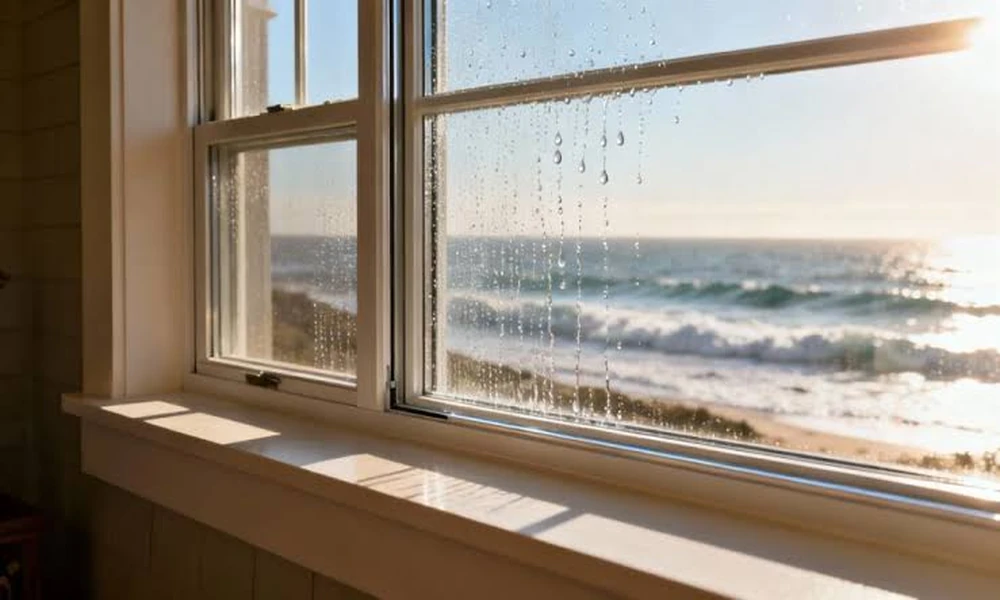
Six months. That is how long a mainland-grade paint job survives on a windward-facing wall in Kaneohe before it starts to chalk, blister, and peel in sheets. I have watched it happen on houses where the homeowner did everything right except choose and prep for the wrong climate.
Hawaii is a brutal place to paint, and it is a wonderful place to live. Those two facts explain almost every premature paint failure on the islands. Salt air eats into the film. Trade winds drive moisture into every seam. And the sun here does not just fade color, it breaks down the binder that holds pigment to the wall.
The fix is not a fancier can of paint. It is a sequence: diagnose what killed the last coat, prep for moisture and salt, then pick a product built for the tropics. Get that order right and a repaint can hold for years instead of months.
What actually kills paint on the islands
Three forces do the damage, and they rarely work alone.
Salt. Ocean air carries chloride particles that settle on exterior surfaces and pull moisture against the substrate. On homes within a mile or so of the water, that film never really dries out. Paint applied over salt contamination fails from underneath, which is why you see it let go in patches instead of wearing thin evenly.
UV. The sun here is intense year-round. Ultraviolet light degrades the resin in paint, and once the binder breaks down, the pigment is basically loose dust sitting on your wall. Chalking is the first symptom. Fading comes next.
Moisture. This is the one homeowners underestimate. According to the National Weather Service, Hawaii sits in a tropical climate with consistently high humidity, and windward slopes get far more rain than the leeward side. Moisture moves through walls in both directions. Paint that traps it inside blisters and peels. Paint that lets it escape lasts.
If you want to know which of these is beating up your house, walk the perimeter after a rain. North and windward faces that stay damp the longest are your problem walls. So is anything under a roof drip line or behind a hedge that never gets sun.
Prep is 80 percent of the job (and skimping on it is why you are repainting)
Most paint failures I see trace back to prep that got rushed. Here is the order that matters.
- Wash everything. Pressure-wash or hand-scrub to remove salt, dirt, and chalk. Let it dry completely. Two days in Kona, three or four on the rainy side.
- Scrape and sand. Take off every loose edge. Feather the transition so you do not leave a ridge the new coat will highlight.
- Find the moisture source. Blown caulk, a cracked flashing, a clogged gutter. Painting over an active leak is throwing money into the wind.
- Patch and prime. Bare wood, patched drywall, and exposed concrete all need a primer coat. Skipping primer on a porous surface is one of the most common shortcuts, and it is the one that costs the most.
- Caulk after priming. Seal joints, trim gaps, and penetrations so water has nowhere to sit.
One caveat worth repeating: do not paint in the heat of the afternoon or right before rain. Paint needs time to cure, and in humid conditions that window stretches longer than a mainland crew expects. Slow down and the finish tightens up.
Primer, caulk, and product choices that fit the tropics
Pick products the way you would pick gear for a season, not for a single weekend.
On exteriors, look for acrylic and elastomeric coatings rated for high humidity and UV. Elastomeric coatings flex with the wall and bridge small cracks, which is a real advantage on masonry and stucco that moves with temperature and moisture. For interiors in rooms with no ventilation, moisture-resistant formulas make a difference, especially in bathrooms and laundry areas.
Primer is not optional. Use an alkali-resistant primer on concrete and masonry, and a stain-blocking primer anywhere you have water marks or tannin bleed. Caulk with a paintable exterior-grade sealant, not the cheap stuff that hardens and cracks within a year.
And here is the honest part: a lot of homeowners on Oahu reach a point where the scope of work outruns a weekend. Water intrusion behind a failed coat, spalling concrete, rotted trim under a window. That is when a full-service painting company in Hawaii earns its keep, because the crew can diagnose the moisture problem, repair the substrate, and paint in the right sequence instead of just rolling on a fresh color and hoping.
A haircut rule for choosing paint: the 3-layer test
I use a simple framework when I evaluate a paint system, and it works whether you are buying for yourself or hiring out. Call it the three-layer test. Every exterior paint job is three stacked layers, and the cheapest one to fix is the top, the most expensive is the bottom.
Layer one is the substrate. Wood, stucco, concrete, drywall. If this layer is cracked, spalling, or holding moisture, no paint will save it. Fix this first or you are wasting both money and time.
Layer two is the primer. This is your bond and your moisture gate. A primer that does not match the surface is the quiet reason a finish fails in year two instead of year eight.
Layer three is the topcoat. This is the part everyone argues about at the paint counter, and it is the least important of the three. A mid-grade topcoat over good prep beats a premium topcoat over bad prep nearly every time.
One named scenario to make this concrete. A friend repainted a rental in Ewa Beach and skipped primer on a patched wall to save a weekend. The patch bled through by the following summer, and the whole wall had to be redone. Two days saved, two weeks lost.
What to ask before you hire
Price is the last question, not the first. Ask how the crew handles prep. Ask what primer they use and why. Ask whether they check for moisture and salt contamination before they quote. Ask if they are licensed and insured, and whether their estimate is free and written.
If a bid comes in dramatically lower than the rest, the missing money is usually hiding in the prep stage. That is where the shortcuts live.
Hawaii will always be hard on paint. The sun, salt, and rain are not going anywhere, and neither is the trade wind that pushes moisture through every seam in your house. But paint failure is not a climate fact of life, it is a prep decision. Get the sequence right, and your next repaint will be a maintenance item instead of a renovation. Walk your walls after the next rain. Where does the water linger longest? That is where you start.
