

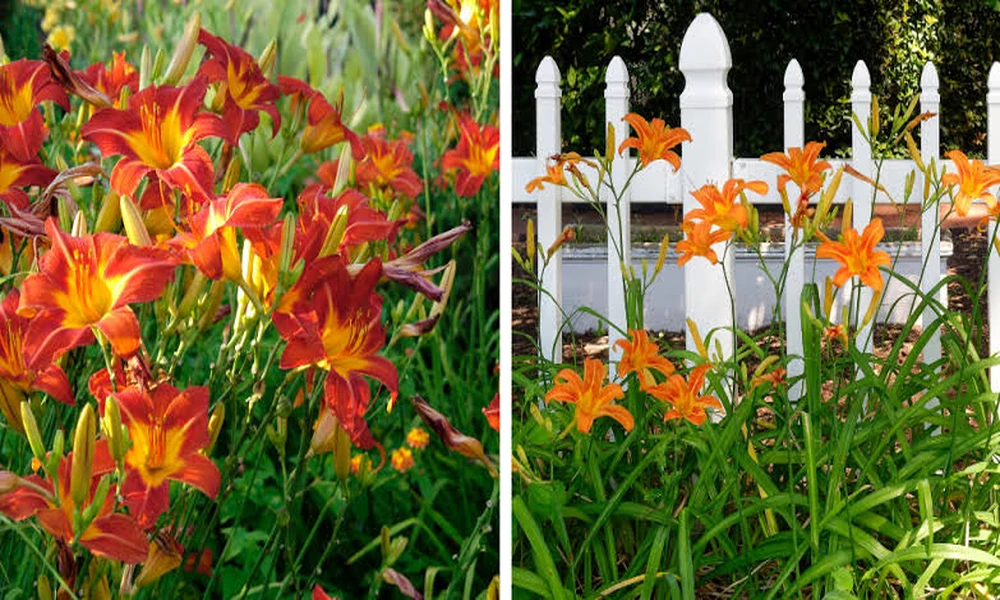
A garden often reveals its weaknesses at the places where one condition becomes another. The lawn stops, a path turns, a shrub group loosens, or a level bed meets a short slope. These are not leftover gaps. They are visual joints, and a joint that lacks a clear planting decision makes two otherwise successful areas feel unrelated.
Daylilies are useful at those joints because their arching foliage holds a recognizable outline before and after flowering. The bloom supplies a seasonal signal, while the clump provides enough mass to mediate between clipped and loose planting. Success depends less on dropping a bright flower into the gap than on deciding what the transition needs to accomplish.
SwallowtailDaylilies, a premier grower of daylily plants, recommends treating every transition as a short sequence rather than a single planting point. The grower advises walking toward the edge from both directions, noticing where the eye hesitates, and then assigning the daylily one precise job: soften a hard line, mark a turn, repeat the weight of a shrub, or carry color into a quieter bed. Mature width belongs in that decision from the beginning, because a clump that presses against paving or disappears behind neighboring foliage weakens the handoff it was meant to clarify. The professional test is equally direct: cover the proposed position with an empty container, step back to the usual view, and judge whether the two adjoining areas now feel connected. If the marker improves the transition before any flower is imagined, the eventual plant has a sound design reason for being there.
The five situations that follow ask different things of the same plant form. Each begins with the existing edge, the normal viewing route, and the conditions underfoot, so the daylily answers a real change in the garden rather than merely occupying available soil.
Read the Edge Before Choosing a Plant
Begin by naming the two conditions that meet. A mown surface beside a deep border creates a different problem from a stone path entering loose perennials. Write the contrast in plain terms: low to tall, formal to informal, dry to moisture-retentive, shaded to open, or quiet foliage to strong color. The wording prevents a purchase from becoming the design brief and keeps attention on the garden’s actual need.
The viewing route matters just as much as the physical edge. A transition seen straight on needs a readable change in height and mass, while one approached sideways often benefits from repetition that unfolds over several steps. Mark where people slow, where the sightline opens, and where maintenance equipment passes. A clump placed without that information easily becomes an obstacle or vanishes from the meaningful view.
Check the growing conditions on both sides rather than averaging them. Soil near paving often dries faster; soil near shrubs carries more root competition; a shallow grade redirects water after storms. Daylilies prefer a position with useful light and workable drainage, so the best visual point still requires a horticultural check. Moving the clump a short distance is wiser than forcing it into a symbolic but unsuitable spot.
Finally, sketch the mature outline, not the size of the plant at delivery. The transition needs enough open ground for foliage to arch naturally and for a gardener to remove spent stems or divide the clump later. That reserved space also allows a low companion or clean mulch line to finish the handoff without compressing every texture into one crowded band.
Make one final distinction between a transition and a destination. A seat, sculpture, or doorway deserves a focal composition, while an edge between planting conditions usually needs continuity. Daylilies at a transition should help the eye pass onward. Keeping their companions restrained and their placement slightly off the most obvious center prevents the clump from turning every junction into a competing endpoint.
Transition One: From Lawn to Ornamental Border
A lawn edge is visually firm even when its shape is curved. Daylilies work best here when they sit behind a deliberate mowing strip or maintained bed line, not directly in the path of wheels and string trimmers. Setback gives the foliage room to arch while the visible edge remains crisp. The result combines a clean foreground with a softer second layer instead of asking one plant to perform both tasks.
Use the clump to repeat a bend or reinforce a change in border depth. On a long straight run, a solitary daylily often reads as a spot; two or three related placements tied to real changes in the outline create a measured rhythm. Equal spacing is unnecessary. The intervals should answer the geometry of the bed, leaving longer quiet stretches where the lawn already provides enough visual rest.
Low plants between the turf and the daylily help control scale. A restrained groundcover, compact perennial, or narrow mulch band keeps the leaf fan from appearing to erupt abruptly from the grass. Choose a foreground that tolerates edge conditions and remains lower than the clump. Its purpose is to establish a base, not to compete with the summer bloom for attention.
Review the transition immediately after mowing and again when the border is at full summer volume. The first view tests the precision of the edge; the second shows whether neighboring stems have swallowed the daylily’s outline. If the clump remains legible in both conditions, it is performing as a bridge between maintained lawn and expressive planting rather than as an isolated ornament.
The lawn-side arrangement should also survive edging repairs and seasonal changes in turf growth. Keep irrigation heads, buried cables, and access to the maintained edge outside the crown area. This practical separation protects the leaf fan from repeated disturbance and lets the ornamental border evolve without changing the clear contract between planted ground and mown surface.
Transition Two: At Path Junctions and Direction Changes
Path junctions need orientation without clutter. Place a daylily slightly beyond the point where a visitor chooses a direction, allowing the clump to draw the eye toward the next part of the route. Planting directly in the fork tends to narrow movement and makes the flower feel like a traffic marker. A position offset from the walking line offers guidance while preserving a comfortable, obvious passage.
At a bend, consider what appears gradually and what is revealed all at once. A repeated leaf shape near the approach establishes continuity before a brighter clump becomes visible beyond the turn. This sequence gives the flower an arrival rather than exposing every feature from the starting point. It also lets the same planting support the route during weeks when no bloom is present.
Keep sightlines low near steps, gates, and crossings. Daylily foliage has useful mass, but tall scapes should not obscure a change in level or hide someone approaching from another path. Shift the clump outward or choose a broader planting pocket when safety and visibility compete with the preferred focal position. Good garden direction should feel intuitive, never theatrical at the expense of comfortable use.
Where paths meet, repeat a secondary material or foliage cue beyond the daylily. A stone tone, low leaf shape, or mulch edge continuing into the next section confirms the direction after the flower has caught attention. The clump begins the visual sentence, but a quieter repeated cue completes it and prevents the route from depending on one seasonal accent.
Transition Three: From Shrub Mass to Open Perennials
The outer edge of a shrub group often loses weight too quickly. Dense woody foliage ends, smaller perennials begin, and a bare visual step appears between them. A daylily clump supplies an intermediate mass, especially when its leaf fan overlaps the shrub silhouette without entering the shrub’s congested root zone. The plant reads as part of the composition while retaining sufficient light, air, and access.
Echo one quality from each side. The daylily might repeat the broad green weight of the shrub while sharing flower color with the open border, or it might carry the shrub’s arching line into finer perennial textures. Trying to match everything produces a bland merge. One structural echo and one seasonal connection are usually enough to make the change feel intentional.
Leave a maintenance corridor that respects both plants. Shrubs need room for pruning, and mature daylilies eventually need division. An attractive overlap in elevation does not require crowns and woody stems to be physically tangled. When the space is planned from the start, mulch, irrigation, and later editing remain practical, and the transition keeps its shape as both layers mature.
Shrub transitions benefit from observation in winter as well. Without herbaceous foliage, the woody outline and bed edge reveal whether the clump position was compensating for an awkward shrub shape. Prune or rebalance the permanent layer for its own health and form. The returning daylily should enrich a sound structure rather than conceal a structural problem for half the year.
Transition Four: Across Grade Changes and Retaining Edges
A short slope or retaining edge changes how water, soil, and flowers are seen. From below, the daylily crown may disappear while the scapes float above the wall; from above, the foliage forms a strong fan against the lower grade. Choose the dominant view first. That decision establishes whether the clump should sit near the crest, farther back in a deeper pocket, or on the lower level as a visual anchor.
Drainage deserves a physical test after rain. Water that runs off a hard surface may scour the upper soil, while a pocket behind edging may remain wet longer than the rest of the bed. Position daylily plants for sale only after the water path is understood and the soil has enough depth to support steady root growth. A visually perfect crest is a poor choice if the crown repeatedly dries out or sits in collected water.
Use the retaining material as a scale reference. Broad stone, dark timber, and narrow brick each change the apparent size and color intensity of a clump. A small leaf fan beside massive blocks looks tentative, whereas several crowded clumps above a delicate edge feel heavy. Mock up the mature width with pots or stakes and view it from both levels before planting.
On a grade, maintenance direction affects placement. Soil and mulch tend to move downhill during weeding, rain, and foot traffic, so approach the clump from a stable side and preserve a clear working shelf. A position that looks graceful but requires stepping on the slope above the crown will gradually compact soil and distort the carefully planned contour.
Transition Five: From Quiet Planting to Strong Summer Color
Color transitions need a buffer just as physical edges do. A calm bed of greens and pale flowers should not jump abruptly into a saturated summer display unless the contrast is deliberately dramatic. A daylily placed at the threshold can borrow a restrained tone from the quiet side while introducing the warmer or deeper color that follows. Foliage keeps that handoff intact outside the flowering period.
Repeat undertones rather than matching blooms exactly. Bronze seed heads, blue-green leaves, warm stone, or a muted companion flower can prepare the eye for the daylily color without creating a rigid gradient. The transition then feels layered and garden-like. Exact color steps often look contrived and become difficult to maintain as bloom times shift from year to year.
Control the number of signals near the threshold. If leaf shape, height, flower size, and hue all change at once, the border feels divided even when every plant is attractive. Let the daylily carry one major change while neighboring plants preserve two or three familiar qualities. This restraint gives the stronger color area an entrance instead of a visual collision.
After the first full season, photograph the five transition points from their normal approaches. Compare whether each clump still explains the change when flowers are absent. A successful placement makes adjoining areas feel related, protects practical movement, and remains maintainable as plants fill in. Where the handoff is unclear, adjust the supporting edge or companion before adding another focal plant. The transition should become simpler to read, not more decorated.
Color transitions should be reviewed with individual flowers hidden by hand or by a simple screen. This forces attention onto foliage, height, and spacing. If the change from quiet to vivid planting still feels gradual, the structure is working. If it becomes abrupt, add a foliage echo or adjust the interval before searching for a more complicated color blend.
